What to Use Instead of Synthetic Food Dyes: A 2027-Ready Guide to Natural Colorants
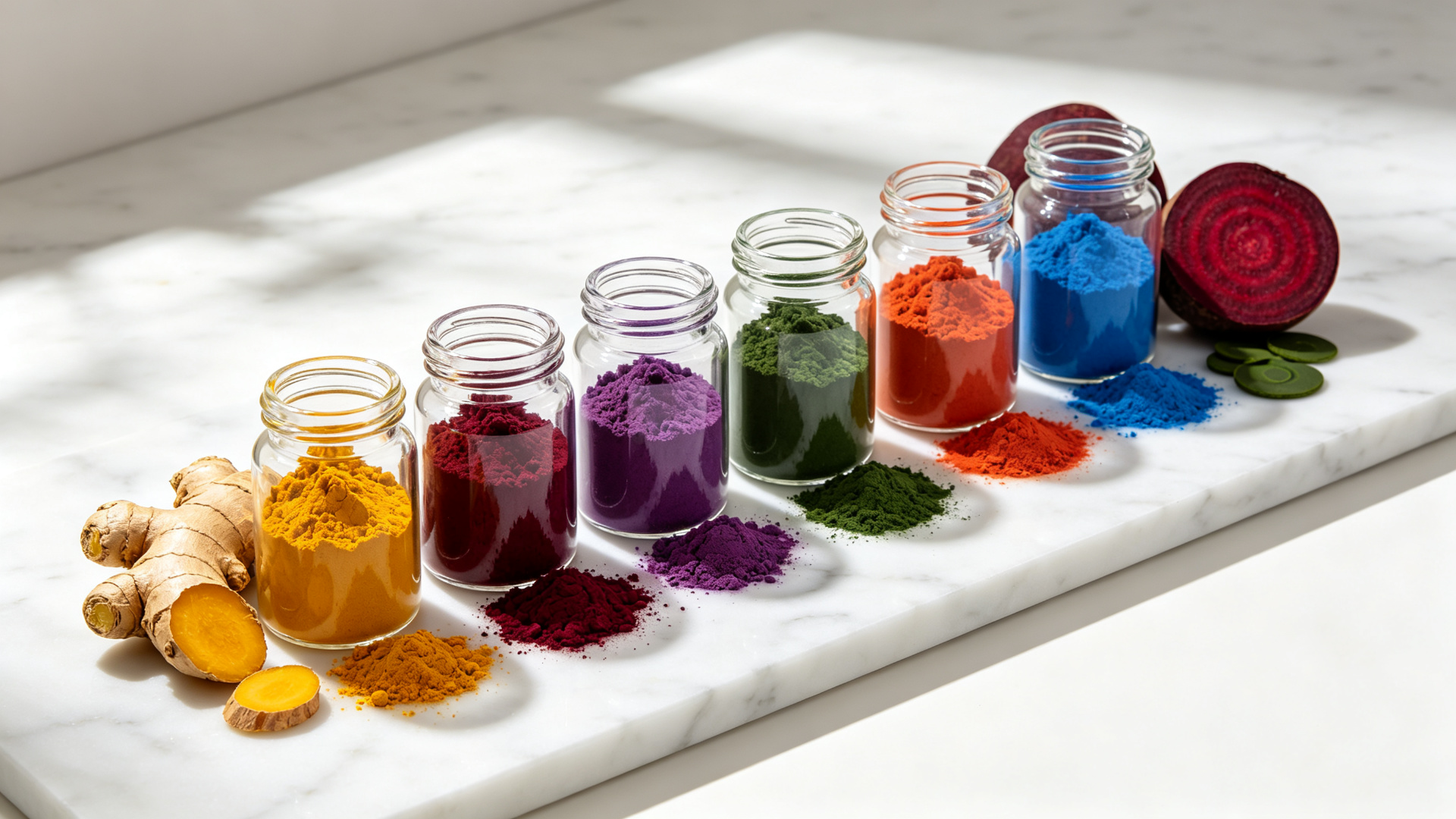
FDA is phasing out petroleum-based synthetic dyes, and Walmart's 2027 deadline is already reshaping reformulation pipelines. Here's what food and beverage formulators need to know about natural color alternatives—from curcumin to phycocyanin—and how to choose them.
**The synthetic dye era is ending—on a deadline.**
In April 2025, the FDA announced a plan to phase out six petroleum-based synthetic dyes—FD&C Red No. 40, Yellow No. 5, Yellow No. 6, Blue No. 1, Blue No. 2, and Green No. 3—from the U.S. food supply. Retailers followed fast: Walmart committed to removing certified colors from its private-label products by January 2027, and Target has already stripped synthetic colors from its cereals. Major brands including General Mills, Nestlé USA, Hershey, and Kellanova have all announced reformulation commitments between 2026 and 2027.
This is no longer a consumer-preference signal. It is a supply chain transformation with a clock.
**The scale of the shift**
According to the National Confectioners Association and RTI International, products containing FD&C colors generated $57.8 billion in U.S. retail sales in 2025—7.1% of all food and beverage sales. Beverages led at 28.9%, followed by candy (22.4%) and savory snacks (19.6%). In confectionery alone, products containing these dyes accounted for 42.2% of candy sales.
The problem: replacing them at scale. RTI estimates that a complete transition could increase demand for natural (non-FD&C) colorants by 400–500%, and today's agricultural and processing capacity cannot support that growth without major new investment. Because plant-derived colorants are generally less concentrated than synthetic dyes, matching a shade can require ten times more colorant by weight.
The price signal is already visible. Under an accelerated transition scenario, RTI models average price increases of over 500% for non-FD&C colorants—with curcumin up 1,600%, chlorophylls up 856%, and annatto up 860%. Suppliers like Sensient are investing up to $250 million to expand natural color capacity, a strong signal that the industry's biggest players expect the squeeze to last.
**What formulators actually need to check**
- **Stability window.** Anthocyanins shift hue with pH; curcumin performs best in oil-based systems; phycocyanin is vivid but heat-sensitive. Match the colorant to your process, not just your target shade. - **Dosage economics.** Natural colorants need higher usage levels than dyes. Calculate cost per batch, not per kilo. - **Clean-label positioning.** In May 2026, the FDA updated its labeling approach so products containing natural colors can claim "no artificial colors." That is a marketing advantage brands are already using. - **Supply security.** U.S. imports dominate: 87.5% of curcumin comes from India, 98.2% of annatto from Brazil. Diversifying sources—including fermentation-based production—reduces risk.
**Where EarthHue fits**
EarthHue produces natural colors from plant and microbial origins—curcumin (golden yellow), beetroot red, anthocyanins, copper-free chlorophyll, astaxanthin, and phycocyanin—with consistent batches and application support for beverages, confectionery, dairy, and cosmetics. As the FDA transition accelerates, stable supply and reproducible color matter more than ever.
**Ready to reformulate?** Our team can help you match the right natural colorant to your application and process. [Contact EarthHue]