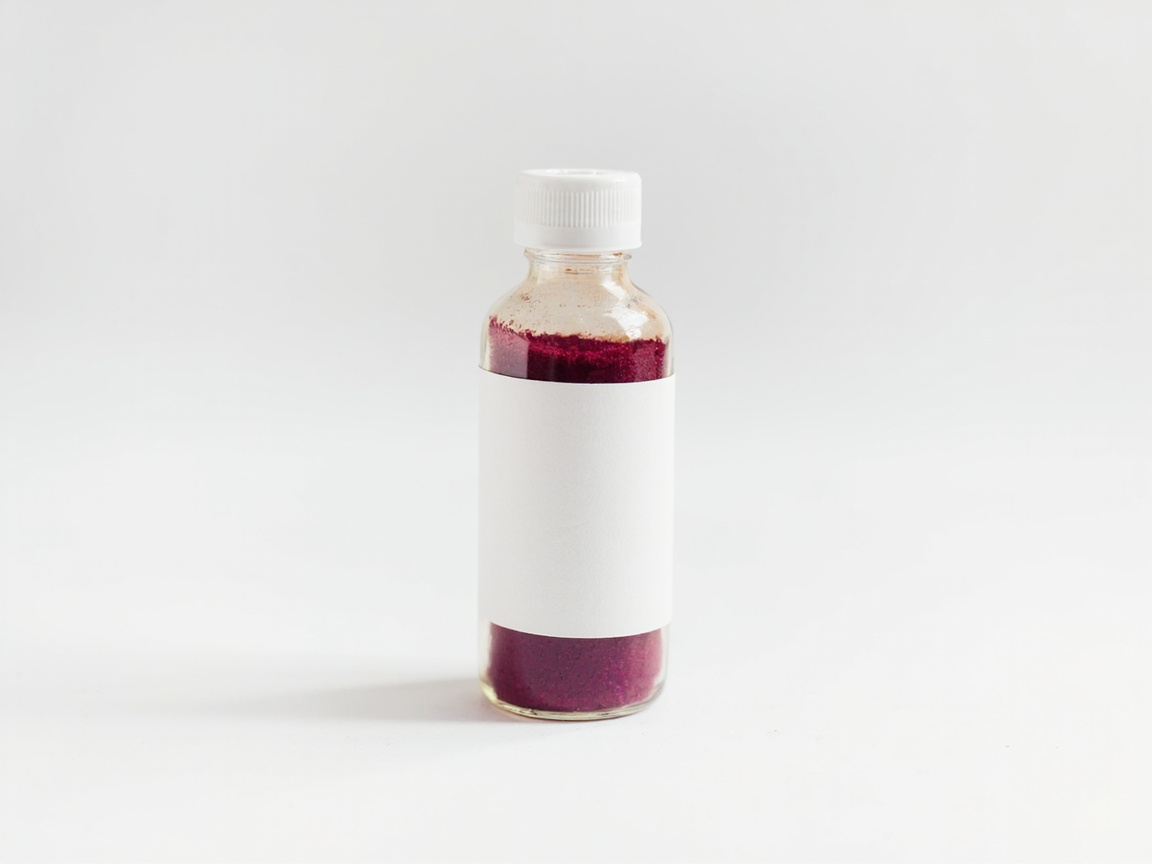
Series: Fermentation-Derived
Fermentation Astaxanthin from Phaffia rhodozyma — EarthHue Asta-Yeast 110
Overview
Astaxanthin produced by controlled fermentation of the yeast Phaffia rhodozyma, then extracted and standardised into a free-astaxanthin oil suspension. The route removes harvest and seasonality from the supply chain, so assay and hue hold batch after batch and production runs all year. Delivers the same 3S,3′-S active molecule as Haematococcus at a lower cost per kilogram of active, in a grade built for food colouring, feed and nutraceutical formulations.
Specifications
| Active content | Astaxanthin ≥3.0% (HPLC, 3S,3′-S isomer) |
|---|---|
| Source organism | Phaffia rhodozyma (yeast), non-GMO |
| Production route | Controlled batch fermentation in closed bioreactors |
| Product form | Oil suspension, free astaxanthin |
| Colour | Deep red to red-purple |
| Carrier | Refined sunflower oil + natural tocopherol |
| Solubility | Oil-dispersible |
| E-number | E 161j (EU colour additive number). EU colour authorisations are source-specific — the source-specific dossier for our Phaffia-derived material is available on request. Haematococcus astaxanthin-rich oleoresin enters the EU separately as a novel food under Reg (EU) 2015/2283 and Impl. Reg (EU) 2017/2470 as amended by 2024/1026 |
| CAS | 472-61-7 |
| Typical use level | 0.05–0.5% (colour) / 4–12 mg/day (supplement); EFSA advises a maximum of 4 mg/day from H. pluvialis |
| Storage | Below 25 °C, protected from light |
| Shelf life | 24 months unopened |
| Minimum order | 1 kg |
Applications
Frequently asked questions
Is yeast astaxanthin the same molecule as Haematococcus astaxanthin?
What is the typical assay and how do I specify it?
Does yeast astaxanthin have a stronger colour than the algae grade?
Is the Phaffia strain non-GMO and free of allergens?
Related products
Fermentation Lutein from Xanthophyllomyces dendrorhous — EarthHue Lute-Ferm 120
Lutein produced by controlled fermentation of the yeast Xanthophyllomyces dendrorhous, then purified and standardised into a free-flowing powder. Unlike marigold lutein, which depends on a crop and a extraction yield, the fermented route gives a stable assay and colour through the year, with no pigment carry-over from the plant matrix. Intended for eye-health and antioxidant nutraceutical positions, water-dispersible colour systems and clean-label formulations.
Fermentation Lycopene from Yarrowia lipolytica — EarthHue Lyco-Ferm 130
Lycopene produced by controlled fermentation of the yeast Yarrowia lipolytica, then purified and held in a stabilised oil suspension. The fermentative route delivers a consistent lycopene assay with no dependence on tomato crop quality, and it keeps working through the winter supply window when field extraction tightens. Built for functional beverages, dairy, meat analogues, bakery and nutraceutical applications that need a clean-label red that holds its hue through processing.
Fungal Fermentation Lycopene from Blakeslea trispora — EarthHue Lyco-Blak 131
Lycopene produced by fungal fermentation of Blakeslea trispora and supplied as a high-assay coated powder. This is the classic fermentation route for lycopene and the one behind most of the published safety and stability history, which makes it the natural choice where a documented history matters. The 10% assay powder handles applications where a high pigment loading has to fit into a small solids budget.